Introduction
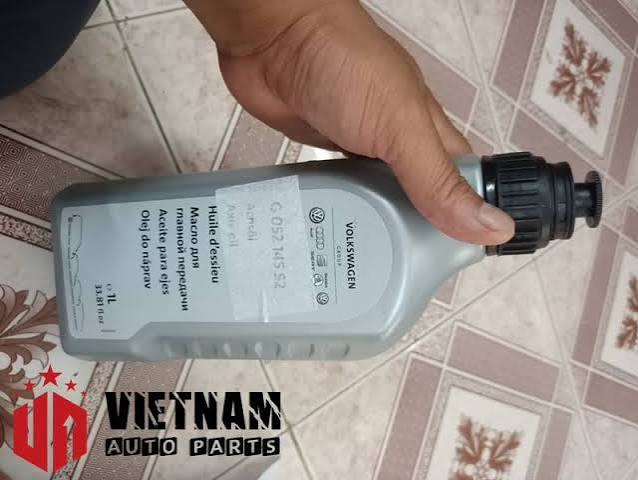
A string such as G052145S2 may look like an ordinary collection of letters and numbers, but in the automotive world, a code like this can carry important information. It identifies a Volkswagen Group original equipment specification associated with gear oil and is referenced across Volkswagen, Audi, SEAT, and Škoda applications. Parts catalogs and automotive suppliers commonly associate G052145S2 with 75W-90 gear oil intended for selected drivetrain components.
For vehicle owners, however, the most important question is not simply what the number means. The real question is whether G052145S2 is the correct fluid for a particular vehicle, transmission, differential, or other driveline component. That distinction matters because Volkswagen Group vehicles use several different lubricants, and similar-looking fluid specifications are not automatically interchangeable.
The specification has also appeared under slightly different formatting, including G 052 145 S2 and G-052-145-S2. These versions generally refer to the same underlying OEM number. Some replacement-fluid manufacturers and automotive parts suppliers list their products as compatible with the specification, but compatibility should always be confirmed against the exact vehicle and component rather than relying solely on a product description.
Understanding what G052145S2 represents can therefore help vehicle owners make better maintenance decisions. It can also prevent one of the most common mistakes in drivetrain maintenance: choosing a lubricant because its viscosity looks right while overlooking the manufacturer’s required specification.
What Is G052145S2?
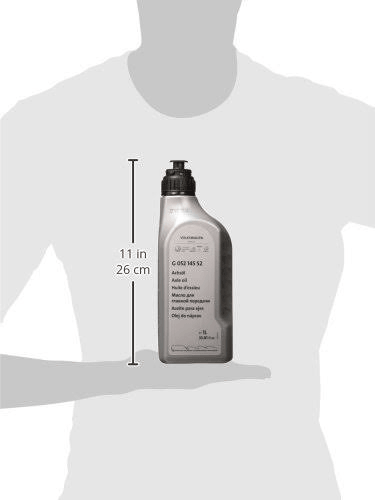
G052145S2 is a Volkswagen Group OEM part number associated with synthetic gear oil. Automotive parts catalogs identify it as G 052 145 S2, with applications connected to Volkswagen, Audi, SEAT, and Škoda vehicles. It is commonly described as a 75W-90 lubricant and is associated with manual transmission and differential applications depending on the particular vehicle.
The number itself is not simply a description of viscosity. The “75W-90” portion describes the oil’s viscosity classification, while G052145S2 identifies a particular manufacturer’s specification or product requirement. That difference is crucial. Two oils can both be labeled 75W-90 while having different additive packages, friction characteristics, or manufacturer approvals.
Several aftermarket products are marketed as replacements or equivalents for G052145S2. Parts catalogs list manufacturers such as FEBI Bilstein, EUROLUB, SWAG, and VAICO among suppliers offering products associated with this OEM reference.
Understanding the Number
The easiest way to understand G052145S2 is to treat it as a reference number rather than as a generic type of oil. Volkswagen Group uses many fluid and component codes, and each can correspond to particular engineering requirements.
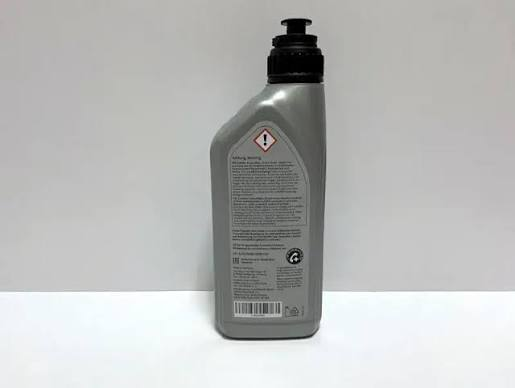
The number can appear in different formats:
- G052145S2
- G 052 145 S2
- G-052-145-S2
These formatting differences do not necessarily indicate different products. Parts catalogs commonly cross-reference the variations as the same OEM number.
That is why searching only for the exact spacing or punctuation is unnecessary when identifying the specification. What matters is matching the complete OEM reference and, more importantly, confirming that it applies to the specific vehicle and drivetrain component.
What Type of Oil Is G052145S2?
Products associated with G052145S2 are commonly listed as SAE 75W-90 gear oil. Some replacement products also identify API GL-5 characteristics. For example, FEBI Bilstein’s product associated with the specification is listed as 75W-90 and API GL-5, while other compatible products may have their own technical descriptions and approvals.
The SAE 75W-90 designation tells us about viscosity behavior rather than proving compatibility. The “75W” describes the oil’s behavior at lower temperatures, while “90” refers to its viscosity range at higher operating temperatures. Gear oils are designed to maintain a protective lubricating film across changing temperatures and loads.
This matters because gears, bearings, shafts, and differentials can experience considerable pressure. When a vehicle accelerates, climbs a hill, tows a load, or transfers power through an all-wheel-drive system, drivetrain components can experience substantial mechanical stress. The lubricant needs to remain capable of protecting the contact surfaces under those conditions.
Why the Correct Specification Matters
Choosing gear oil should never be based on viscosity alone. A bottle labeled 75W-90 may look suitable, but the manufacturer’s specification is a separate requirement.
Gear oils contain additive packages designed for particular operating conditions. These additives can influence wear protection, corrosion resistance, oxidation stability, friction behavior, and the way the lubricant interacts with metal surfaces and drivetrain components.
For that reason, G052145S2 should be treated as a specification reference rather than a simple suggestion to “use any 75W-90.” A replacement product should specifically state that it meets or is suitable for the required OEM specification, and the vehicle’s service information should be checked before installation.
Where Is G052145S2 Used?
The interesting part about G052145S2 is that it has been associated with more than one type of drivetrain component. Parts catalogs list it for certain manual transmission and differential applications across Volkswagen Group vehicles.
Depending on the vehicle, the oil may be relevant to a manual gearbox, final drive, front differential, rear differential, or another specified gear-driven component. This does not mean the same fluid should automatically be poured into every drivetrain component on every Volkswagen Group vehicle.
Modern vehicles can contain several separate fluid systems. An all-wheel-drive vehicle, for example, may have a transmission, front differential, rear differential, transfer-related components, and an electronically controlled clutch system. Each may have a different lubricant requirement.
Volkswagen, Audi, SEAT, and Škoda Applications
The OEM reference G052145S2 is cataloged under multiple Volkswagen Group brands. Parts databases identify it with Volkswagen, Audi, SEAT, and Škoda applications.
That broad brand association can sometimes create confusion. A person may find that the same specification appears on several models and assume it applies universally. It does not.
Vehicle design changes from one generation to another, and even two versions of the same model can use different transmissions or differentials. Engine type, drivetrain configuration, model year, gearbox code, and equipment level can all influence the required fluid.
For that reason, the safest method is to identify the vehicle by its exact model, year, engine, drivetrain, and component before purchasing G052145S2 or an equivalent product.
G052145S2 and Aftermarket Alternatives
One of the most common questions surrounding G052145S2 is whether the original Volkswagen Group fluid is the only option. It is not necessarily the only product available. Various aftermarket manufacturers sell gear oils that are listed as equivalents or suitable replacements for the OEM reference.
Automotive parts catalogs currently associate the specification with brands including FEBI Bilstein, EUROLUB, SWAG, and VAICO.
The important word here is “equivalent.” An aftermarket oil should not be considered suitable merely because it is 75W-90. The manufacturer should specifically identify compatibility with the required OEM specification or provide a clear technical approval or recommendation.
What to Check on the Bottle
Before purchasing an alternative to G052145S2, look for several pieces of information on the product documentation.
First, check the complete OEM reference. It should clearly identify G052145S2 or G 052 145 S2 as an approved specification, recommendation, or equivalent application.
Second, check the viscosity. Products commonly associated with the reference are 75W-90.
Third, examine the manufacturer’s technical information rather than relying only on a retailer’s title. A retailer may simplify product descriptions, while technical documentation usually provides much more useful information about approvals and recommended applications.
Finally, verify the vehicle itself. Even a genuine bottle carrying the correct OEM reference should not be poured into a component unless the vehicle manufacturer specifies it for that application.
Why Gear Oil Maintenance Matters
Gear oil does an essential job that is easy to overlook because it is not changed as frequently as engine oil in many vehicles. Inside a gearbox or differential, gears operate under significant loads and rely on lubricant to reduce friction and protect contact surfaces.
As lubricant ages, its condition can change. Heat, mechanical stress, contamination, condensation, and normal wear can gradually affect the fluid. Metal particles or other contaminants may also accumulate over time.
A worn or contaminated lubricant does not automatically mean that a component is about to fail, but it is one reason proper drivetrain maintenance matters. The correct maintenance interval depends on the vehicle, component, driving conditions, and manufacturer’s service recommendations.
Signs That Deserve Attention
A vehicle owner should pay attention to changes such as unusual whining, grinding, humming, difficulty selecting gears, or new drivetrain noises. These symptoms can have many causes, so they should not automatically be blamed on old gear oil.
Fluid leaks deserve particular attention. A small leak can eventually reduce the lubricant level enough to affect component protection. Gear oil around a differential housing, transmission casing, axle seal, or drain plug can indicate that an inspection is necessary.
If G052145S2 is specified for the affected component, simply topping up the fluid without finding the source of a leak may only delay the underlying problem. A proper inspection is more valuable than repeatedly adding lubricant.
How to Approach a G052145S2 Fluid Change
Changing gear oil is different from changing engine oil. Access to fill and drain plugs can be difficult, and the correct fluid level is often determined using a specific procedure rather than by simply pouring in a fixed amount.
The vehicle should be positioned according to the manufacturer’s service instructions. The correct component must first be identified, followed by verification of the required lubricant and fluid capacity.
A technician will normally inspect the old fluid as it drains. Its color and condition can provide useful clues, although appearance alone cannot diagnose internal drivetrain problems.
Why Fluid Capacity Matters
One vehicle may require significantly more or less lubricant than another. Even within the same model family, different transmissions and differential designs can have different capacities.
Parts information can sometimes provide approximate quantities, but exact service procedures should come from reliable vehicle-specific documentation. One example in an automotive parts database lists different capacities for particular front and rear drivetrain applications while associating both with G052145S2 for a specific vehicle identification context.
This illustrates why copying a fluid quantity from another vehicle is risky. The correct amount depends on the actual component being serviced.
Common Mistakes When Choosing G052145S2
The first common mistake is confusing an OEM specification with a universal fluid type. Seeing G052145S2 described as 75W-90 does not mean every 75W-90 oil is an acceptable replacement.
The second mistake is assuming that every Volkswagen Group vehicle uses the same drivetrain lubricant. Volkswagen, Audi, SEAT, and Škoda have produced an enormous range of vehicles with different transmissions and drivetrain systems. A fluid suitable for one application may not be correct for another.
Another mistake is ignoring revisions and updated specifications. Automotive manufacturers sometimes replace older fluid references with newer specifications. Parts catalogs can contain superseded numbers and cross-references, which makes vehicle-specific verification especially valuable.
Don’t Guess From Internet Discussions
Online owner communities can be useful for learning about real-world maintenance experiences, but they should not be treated as the final authority for fluid selection. Recent discussions about G052145S2 show that owners can encounter conflicting information when comparing different model generations, differentials, and newer fluid references.
A better approach is to use community discussions for background information and then verify the actual requirement through the vehicle’s service documentation, manufacturer information, or a competent specialist.
That extra step can prevent an expensive mistake. Gearbox and differential components are far more costly to repair than the lubricant itself.
The Importance of Vehicle-Specific Compatibility
The biggest lesson surrounding G052145S2 is simple: the part number matters, but the vehicle matters too.
A vehicle’s VIN, model year, engine, transmission code, drivetrain configuration, and component identification can help determine the correct lubricant. A parts supplier may be able to check compatibility through a vehicle selector, while a dealership or specialist can verify the specification using manufacturer service information.
This becomes particularly important with older vehicles, modified cars, imported vehicles, and models that have multiple transmission or drivetrain configurations.
A Practical Verification Checklist
Before buying G052145S2 or an aftermarket equivalent, check:
- The exact vehicle model and model year.
- The engine and drivetrain configuration.
- The specific component being serviced.
- The vehicle manufacturer’s required fluid specification.
- Whether G052145S2 is currently specified or has been superseded.
- The required fluid capacity.
- Whether the replacement product explicitly meets the required specification.
- The manufacturer’s recommended service procedure.
This short checklist is more useful than relying on a product title alone. It also reduces the chance of confusing transmission fluid with differential fluid, transfer-case fluid, or another specialized lubricant.
Conclusion
G052145S2 is much more than a random automotive code. It is a Volkswagen Group OEM reference associated with synthetic 75W-90 gear oil and appears across selected Volkswagen, Audi, SEAT, and Škoda applications. Parts catalogs also list several aftermarket products as equivalents or compatible alternatives.
However, the most important point is compatibility. The fact that an oil carries a 75W-90 viscosity rating does not automatically make it suitable for every gearbox or differential. The complete manufacturer specification, vehicle configuration, component, and current service requirements all need to be considered.
For anyone maintaining a compatible vehicle, G052145S2 can be a useful reference when identifying the correct drivetrain lubricant. The safest approach is to confirm the specification against vehicle-specific information before purchasing or installing any fluid.
A small code printed on a bottle can represent a surprisingly important engineering requirement. When it comes to transmissions and differentials, getting that requirement right is far less expensive than learning the lesson after a mechanical problem develops.
Frequently Asked Questions
1. What is G052145S2?
G052145S2 is a Volkswagen Group OEM reference associated with synthetic gear oil. It is commonly listed as a 75W-90 lubricant for selected manual transmission and differential applications.
2. Is G052145S2 the same as G 052 145 S2?
Yes. G052145S2 and G 052 145 S2 are different formatting styles for the same OEM reference. Some catalogs may also display the number as G-052-145-S2.
3. What viscosity is associated with G052145S2?
Products associated with G052145S2 are commonly identified as SAE 75W-90 gear oil. However, viscosity alone should not be used to determine compatibility.
4. Is G052145S2 transmission oil?
It can be used for certain transmission-related applications, but the exact application depends on the vehicle and component. Parts catalogs associate the specification with manual transmission and differential applications.
5. Can G052145S2 be used in a differential?
Yes, G052145S2 is associated with certain differential applications. However, the correct fluid should always be confirmed for the exact vehicle and differential because different models can require different specifications.
6. Is G052145S2 synthetic oil?
Products sold under or associated with the genuine Volkswagen/Audi reference are commonly described as synthetic gear oil. Some aftermarket products may use different formulations, so the technical documentation for the specific product should be checked.
7. Are there aftermarket alternatives to G052145S2?
Yes. Automotive parts catalogs list products from manufacturers such as FEBI Bilstein, EUROLUB, SWAG, and VAICO as alternatives or products associated with the OEM reference.
8. Can I use any 75W-90 oil instead of G052145S2?
No. A 75W-90 viscosity rating does not by itself prove compatibility. The replacement oil should specifically meet the required OEM specification or be clearly recommended for the exact application.
9. Which car brands use G052145S2?
The OEM reference is associated with Volkswagen, Audi, SEAT, and Škoda applications. The exact vehicle and component must still be checked before using the fluid.
10. How can I confirm whether G052145S2 is right for my car?
Check the vehicle’s exact model year, engine, drivetrain, transmission or differential type, and manufacturer service information. Providing the VIN to a qualified dealer or specialist can also help establish the correct current fluid specification.
YOU MAY READ ALSO
Coupang